

If you’re outside the world of drug development (which, admittedly, most people are), you might have missed the series of initiatives announced by the Department of Health and Human Services (HHS) to improve the efficiency of clinical trials. I was surprised at how much had been announced recently, so I decided to collect them all in a blogpost and share some thoughts. First, I’ll quickly list what’s been announced.
Operation TrialBlazer
Many of the announcements came in June this year when the Department of Health and Human Services announced ‘Operation TrialBlazer’, which they say is aimed at bringing back early stage clinical research to the United States, as biotech has been surging in China. The operation includes several initiatives from the FDA:
Draft guidance on when researchers can use a single pivotal trial plus confirmatory evidence to apply for drug approval, rather than two pivotal trials.
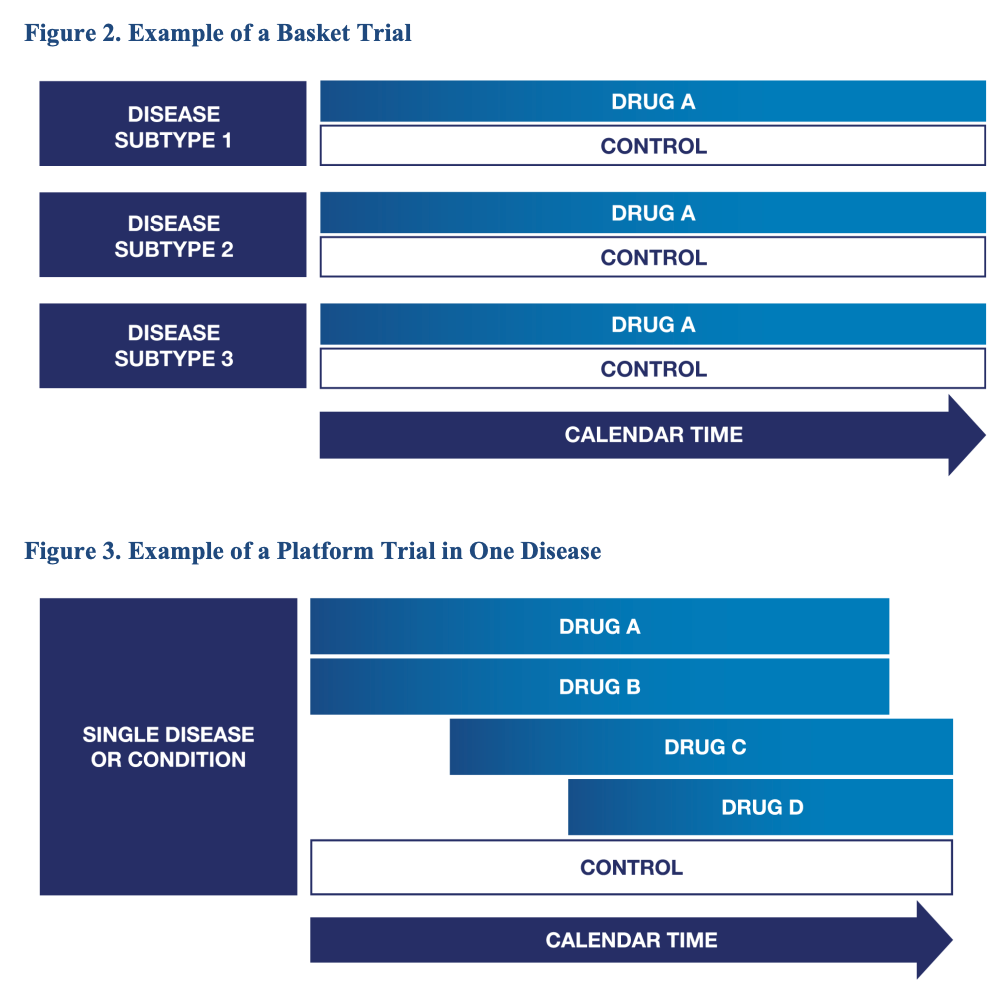
Draft guidance on ‘master protocols’ for trial designs including platform trials, which test multiple drugs in the same trial, and basket trials, which test one drug across multiple diseases or disease subtypes.
Clarifications on the manufacturing requirements for phase one trials being lower than those for later phases.
Draft guidance on how researchers can use quantitative models to select doses for their drugs instead of relying on animal toxicity studies alone.
A pilot program for drug developers to partner with qualified research institutions to prepare components of their ‘investigational new drug’ (IND) application, before they can begin ‘first-in-human’ clinical trials, though those applications would still be reviewed by the FDA before they’re allowed to begin.
A platform for rolling submissions to allow the FDA to review components of the application as they’re ready, rather than waiting for the whole package.
In addition, they announced that the National Cancer Institute is working with cancer centers and researchers to streamline trial activation and improve enrolment, and the Office of the National Coordinator for Health Information Technology is exploring ways to match patients with suitable clinical trials through electronic health records during routine care.
The roadmap also reported that they’re considering rule-making so one ethics board would review a study for all participating clinical trial sites rather than each site conducting its own separate review.
ARPA-H’s clinical trial acceleration efforts
In September, ARPA-H announced four related efforts to develop tools and infrastructure to speed up trials. ARPA-H Director Alicia Jackson described them as “probably the largest suite of investments that we’ve made in a singular area”. They include the programs:
SURPASS, which aims to build ‘phaseless designs’ to run trials faster, with the goal of cutting clinical trial timelines ‘from taking more than a decade to less than four years’. It involves funding for innovative trials that use shared infrastructure and adaptive designs, in three areas: computer simulations (including digital twins and other predictive models to plan trials and improve prediction of their outcomes), statistical methods (to help researchers analyze incoming data and adapt trials along the way), and AI tools (to automate setting up trials, add new treatment arms, and collect, clean and prepare datasets).
STACK, which would help more clinics in the US become trial sites, including those that lack research experience. Some of this, they say, involves preparing new sites with the help of AI, using existing or synthetic records and simulated workflows.
COMMONS, to create a national patient dataset to identify eligible trial participants, develop predictive models, and generate evidence for regulatory decisions.
CINCH, focused on adults with cancer, to help them understand their options and potentially contribute their data or find clinical trials to participate in.
A new Office of Innovation and Clinical Trial Modernization
At the start of October, the FDA launched a dedicated ‘Office of Innovation and Clinical Trial Modernization’ within their Center for Drug Evaluation and Research. It includes clinical methodology staff and divisions for artificial intelligence and real-world evidence analytics. But more details on its budget, staffing, or even specific changes to review processes are limited, at least so far.
There’s much to be excited about, but more is probably on the way
As they’re described, I think the initiatives contain a lot to be excited about. A national patient dataset could make it far easier to identify participants across the country, hopefully making it easier to recruit faster and even increase trial sample sizes, which could speed up trials and make their results more precise. There are already trials in some fields that combine phases 1 & 2 or 2 & 3, but building better infrastructure and tools for ‘phaseless trials’ seems like a logical next step to increase their adoption. And although it might sound mundane, by clarifying manufacturing requirements, the FDA could help reduce companies’ tendency to compile much more data than necessary, which they often do to avoid the risk of rejection.
Despite the number of initiatives already announced, I’d guess more is on the way. Back in June, my co-blogger Adam Kroetsch, who now works at IFP on FDA reform and clinical trial abundance, wrote, “The officials who developed [Operation TrialBlazer] appeared to be doing two things at once: improving the current clinical trials system, and laying the groundwork for more transformative reforms.”
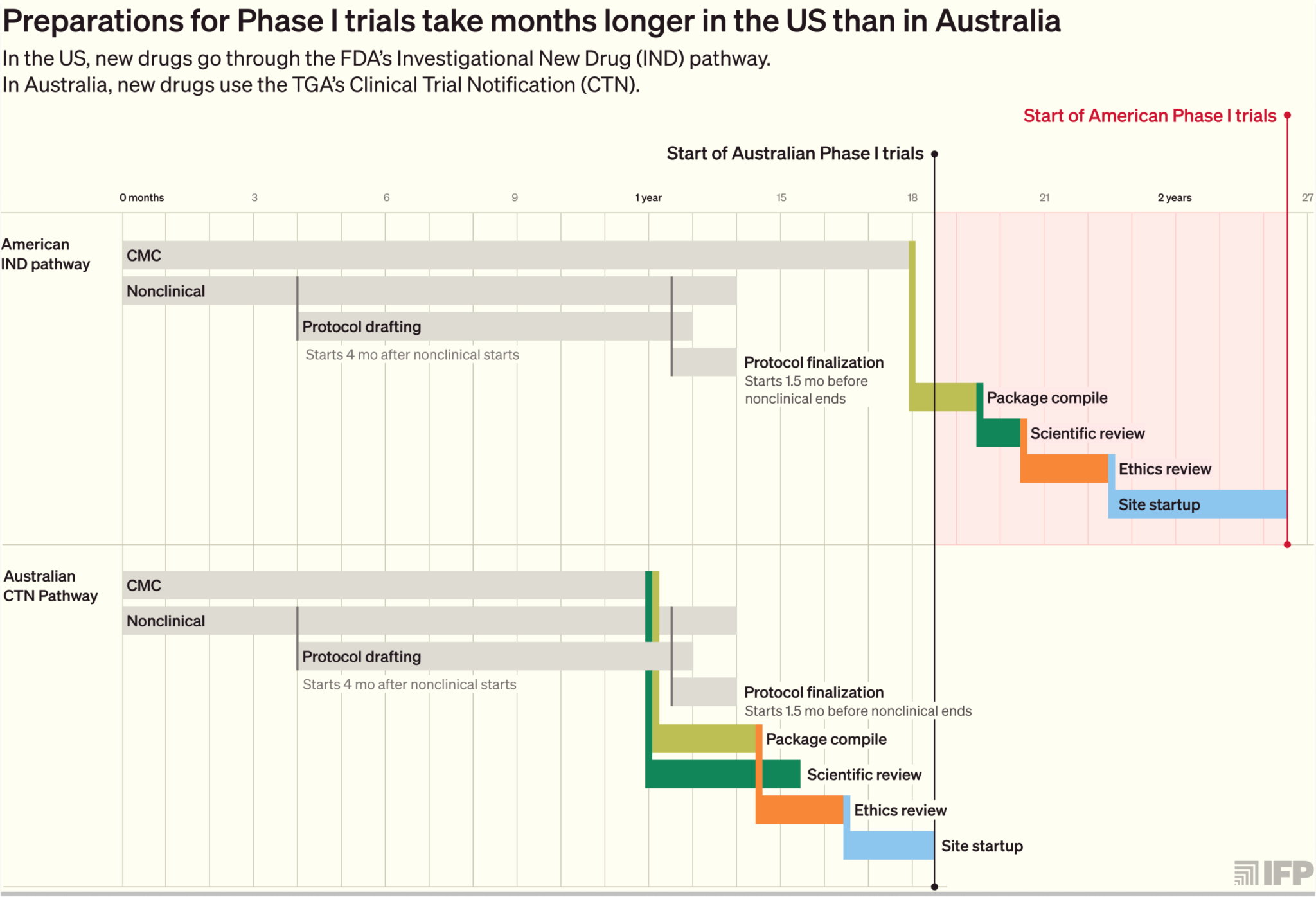
The pilot program for qualified research institutions, he says, could lead to “the eventual creation of an Australian-style clinical trial notification system in the US.” For context, under the US system, drug developers who want to start phase one clinical trials have to wait for the FDA and an ethics committee to review applications first. In Australia, on the other hand, ethics committees review both the scientific and ethical aspects of the trial, while drug developers notify the national regulator (and don’t have to wait for a separate review by it). I’d recommend a recent IFP report comparing the systems, if you’re interested in more detail.
I don’t know what’s coming next, but my wishlist would be for initiatives to improve the validation of surrogate endpoints (for example, by clarifying what evidence is needed for them to be accepted by the FDA, or perhaps directly funding research to validate more surrogate endpoints), and to implement the requirement for a single IRB for multi-site trials in the US.
Staffing struggles will probably limit the initiatives
What I’m worried about, however, is that several of the new initiatives – like the platform for rolling reviews and the pilot program for drug developers to partner with qualified research institutes, at least at first – probably depend on more staffing capacity to implement, which is concerning given how many people were laid off last year across HHS.
As I wrote last month, roughly one-sixth of the FDA’s workforce were laid off last year, and the agency has struggled to hire new staff since then, in part because their HR teams also lost staff. ARPA-H laid off staff early this year too, according to STAT news, who reported that ‘people said they believed 20 individuals were let go between employees and contractors’, which is probably a lot for an agency that totals 121 staff currently, and ARPA-H’s inaugural director was also laid off last year, around the same time as there were large-scale layoffs at the CDC.
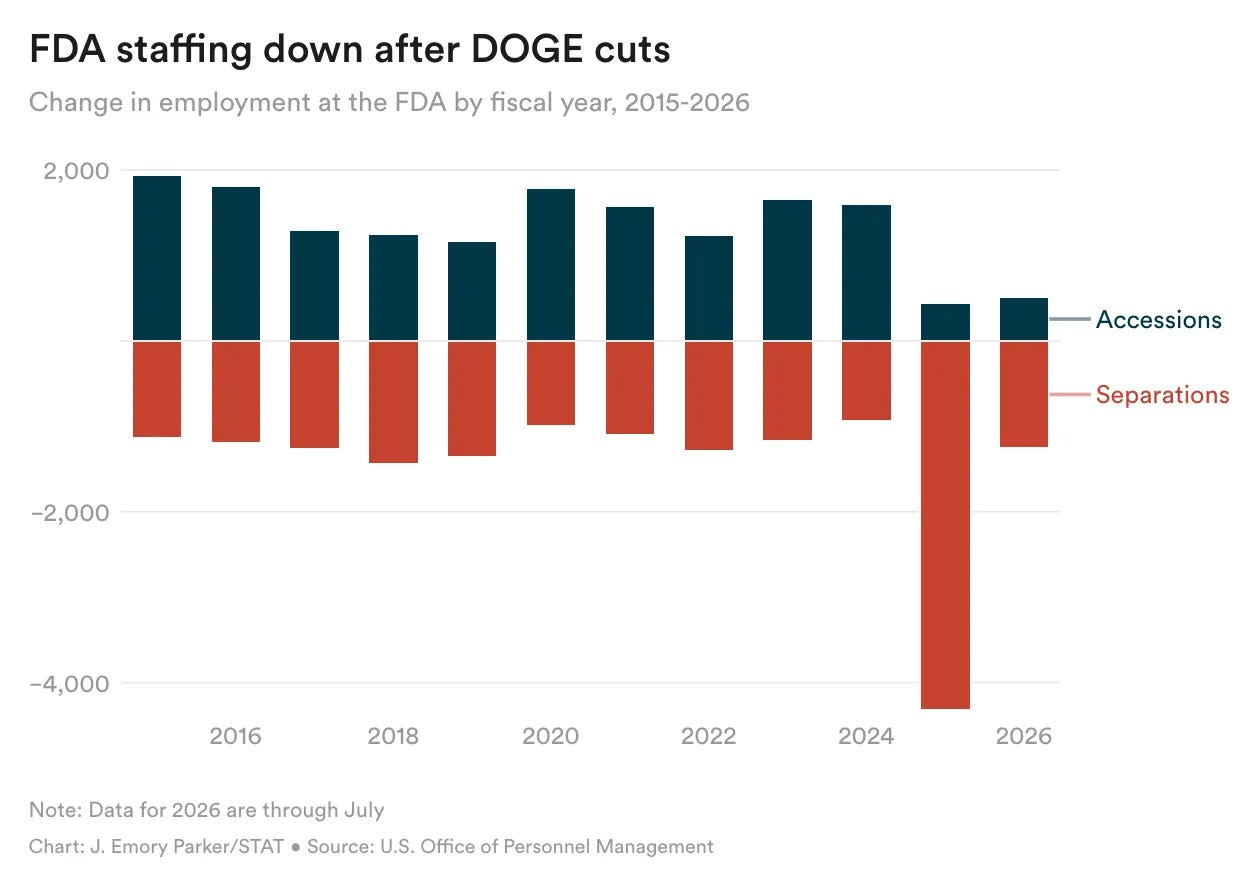
The reason this all matters is that greater staffing capacity tends to mean drugs are reviewed more quickly, and likely that there are more inspections of facilities and safety problems, and that staff work more proactively on new initiatives, while shortages can force them to focus on essential tasks. That may be even more the case for new initiatives, for which companies and researchers might benefit from further clarification to understand how to adapt to them. All this could limit the impact of initiatives that are more staffing dependent, or even make them counterproductive, if hiring isn’t resolved. The next breakthrough, then, might need to be in HR.
More broadly, I’ve been thinking about how important it’s going to be to get the details right and make sure the new initiatives are implemented well, so they’re sustainable in the long run and actually do improve clinical trials. That applies to the agencies as well as to people thinking about clinical trials and ideating on future ideas for reform. If clinical trial abundance is having its moment, let’s make sure it lasts.
Cover art: Composition VIII, by Wassily Kandinsky in 1923.

Perhaps it's not surprising that the catalyst for change is the very real sense of falling behind your major geo-political competitor.