


Here’s what caught our attention over the last week:
California’s year of fees — Alex Armlovich
Observations from Europe — Nisha Austin
Can antibody explain these images? — Saloni Dattani
The future of the university — Jordan Dworkin
The antimicrobial resistance problem — Matt Clancy
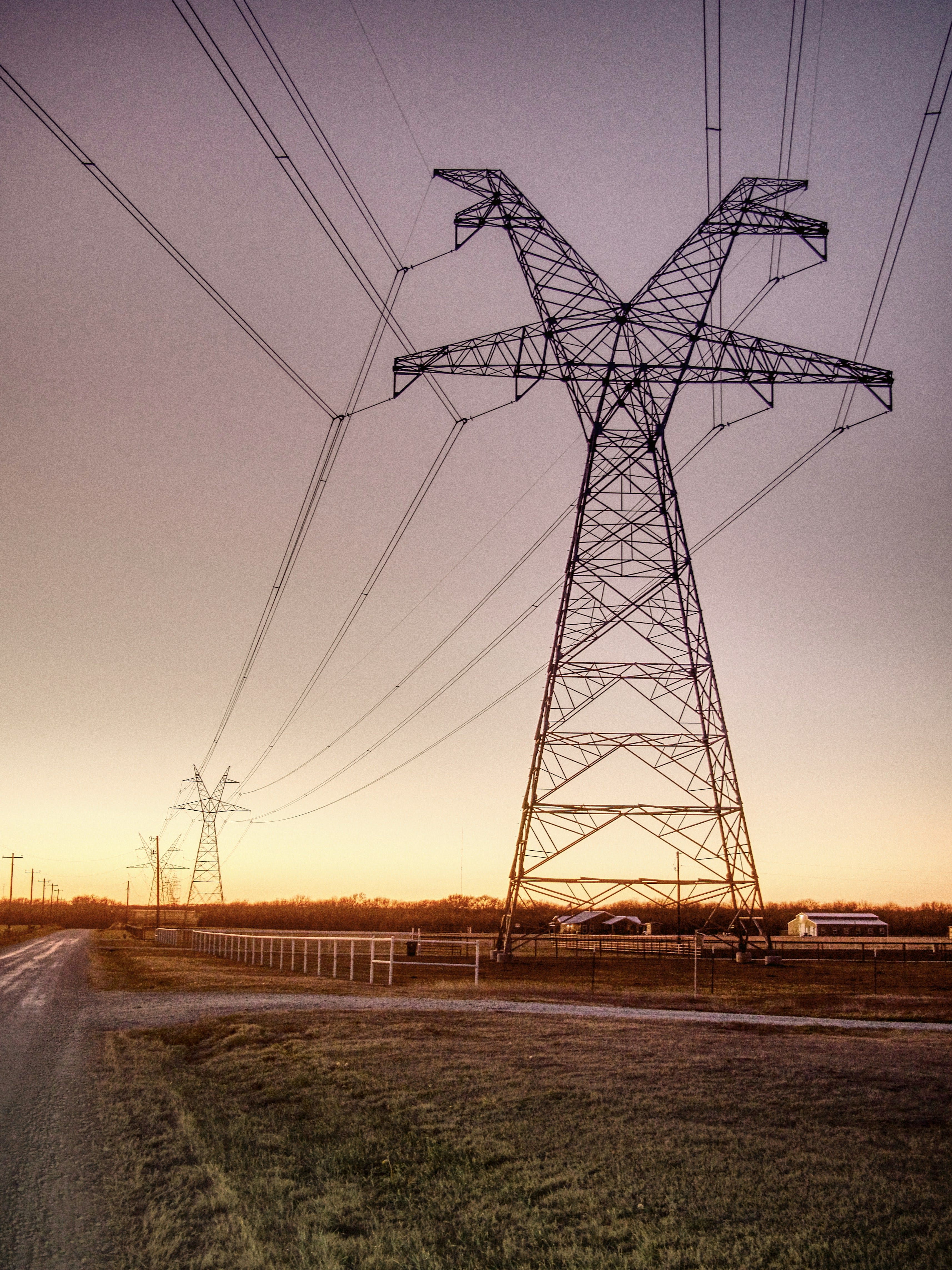
Texas transmission and the Permian basin — Willow Latham-Proenca
The public housing miracle that never happened — Dylan Matthews
California’s year of fees — Alex Armlovich
California housers informally dubbed 2026 the “Year of Fees”: On the heels of the SB79 win that will decisively legalize midrise transit-oriented development statewide when it takes full effect in the early 2030s, YIMBYs and legislative champions took a breather on big zoning bills and turned to fee and exaction reform to boost construction feasibility.
Still, a CAYIMBY pure zoning play just passed: AB 2074, Matt Haney’s Downtown Revitalization Act, requires California’s seven largest cities to designate regional transit hub districts with a 150-foot height baseline (and at least 25% of each district allowing 450 feet) where highrise housing gets streamlined ministerial approval. The bill imports the SB 35/423 labor mandate framework requiring prevailing wage on all projects over 10 units, “skilled-and-trained” workforce above 85 feet. Downtown high-rises are already heavily union-built (though not necessarily always paying full closed-shop wages above market rates for every trade). It’s not clear what to expect in production outcomes because downtown highrises in SF have been mysteriously sluggish of late, with even entitled projects citing extreme construction costs as a reason for delay. AB 2074 originally included a $500M revolving loan fund to help subsidize financing to offset the cost of the labor mandates; the enrolled version downgrades it to a CalHFA study. But surging rents, up at least 26% in SF proper over the last 12 months, may yet wake SF-skeptical bank loan committees out of their dogmatic slumber. It would be ideal if this bill successfully unlocks feasible “missing massive” zoning on top of a half dozen of California’s underutilized rail systems, but at the very least this is still a nice solidarity effort by YIMBYs to repay organized labor’s support for SB79 last year.
Observations from Europe — Nisha Austin
My family vacationed (or as they might say, “vacationed”) in Spain over the last couple of weeks, and we walked a portion of the Camino de Santiago from Sahagún to León. We had our three and six year olds in tow, so there were complaints, though many of them were most clearly articulated by the adults in the party.
A huge part of the draw of the Camino was to do something simple together, to appreciate and minimize, which we certainly did. But the things that were missing also stood out. It turns out a lot of the complaints have active policy literature behind them.
You can’t eat at a “normal” hour. Spain sits on London’s meridian and runs on Berlin’s clock, because Franco moved it in 1940 and nobody moved it back. Solar noon in Madrid falls after 1pm in winter and after 2pm in summer, so lunch at 2 and dinner at 9 are really lunch at 12 and dinner at 7. Spain did ask the EU in October 2025 to stop changing the clocks twice a year, but nobody is proposing to fix the hour that actually moved.
Everyone stays up too late (because of said late dinner), no wonder productivity is bad. Spanish productivity really is low, but not because Spaniards work too little. For example, they work more than Germans, not less: about 300 more hours a year, which is seven and a half extra working weeks. Spanish output per hour is about 63% of Germany’s.
These places feel empty. The Sahagún comarca has lost over 30% of its people and holds 6.1 per square kilometre. Four of Spain’s eleven emptiest comarcas are in the province of León.
You can’t buy a banana, and we’re two hours from Madrid. 4,632 of Spain’s 8,132 municipalities have no food shop at all.
You would think a potential answer is that more people move to Madrid, but increasingly they can’t. A new IMF working paper finds that without the price run-up in Spain’s high-productivity regions, roughly 63,000 more working-age people would have moved to them between 2017 and 2023. The observed net inflow was 1,700. Empty Spain and unaffordable Spain turn out to be one problem. Meanwhile the Camino set a record in 2025 with more than 530,000 pilgrims and 242,000 of them walked the route that runs straight through some of the emptiest parts of Spain where we were; a study commissioned by the Camino municipalities concluded, politely, that this does not fix it.
It’s worth pointing out that Spain is not short on capacity (windmills were a favorite for “I spy”). Between December 2019 and June 2025 it doubled its wind and solar, adding over 40 GW, more than any EU country except Germany, and its wholesale power price in the first half of 2025 ran 32% below the EU average.
To be clear, none of this made the trip worse (some low key suffering is good for personal growth!). The people still living in these towns are the reason the Camino works at all, and they were very good to us. It did send me looking for the research once we got home.
Can antibody explain these images? — Saloni Dattani
Back in May, science sleuth Sholto David came across a suspicious image from the major life-sciences supplier Thermo Fisher. It was a Western blot showing the performance of one of their antibodies that is commonly used in cancer research. On the blot, four apparently separate protein bands were copies of the same shape, duplicated and flipped or rotated to produce the others.
Since then, Reese Richardson, a metascience and computational biology researcher and other sleuths uncovered many more by increasing image contrast and searching suppliers’ catalogues for repeated visual fingerprints, partly using image-search tools. According to Nature, they have now found over 18,000 questionable images across 15 commercial suppliers, with digital alterations such as repositioned bands, painted-over regions, and reused background noise. For the last category, Elisabeth Bik (who some say has forensic laser eyes) told Nature, “That particular type of image alteration or manipulation suggests that these antibodies were never tested at all in the lab.” Weirdly, identical images were sometimes used by multiple suppliers, which suggests that they came from the same third-party manufacturers.
The images don’t necessarily mean the antibodies themselves are flawed, but since other research has found that commercial antibodies are commonly unreliable, I wonder whether this is just the tip of the iceberg, and how much of scientists’ time has been wasted chasing false leads. One takeaway is that researchers should avoid relying on suppliers’ images and independently validate their antibodies. But given how time consuming and repetitive it would be for individual scientists to validate them, a wider effort seems worthwhile. For example, the Canadian open-science company YCharOS tests some commercial antibodies head-to-head and publishes their results openly, and the University of Leicester’s ‘Only Good Antibodies’ hosts this data on a searchable database, though neither are comprehensive. The sleuths themselves also host a Zenodo repository with their findings.

The future of the university — Jordan Dworkin
There’s been a lot of writing lately on what AI is going to do to the university. The most recent entry is from Kevin Munger, who writes in Asterisk that the threat isn’t that AI replaces universities or makes them obsolete (rather they will survive, as they have for centuries, by reinventing themselves), but the possibility of academics reacting defensively, banning or policing its use and turning academic work into “a sort of dockworkers union of knowledge.” He proposes a middle path, in which rather than using AI to churn out yet more papers, academics let it absorb the grunt work and redirect freed-up time to things only universities have the time horizon and incentives to do well: maintaining decades-long datasets that underpin research fields, reading and carefully engaging with others’ work (an activity he positions as to some extent a return rather than a continuation), and acting as a check on a rising tide of amateur research from a newly empowered class of curious non-experts.
The piece pairs well with other recent work engaging with the future of universities from different angles. In June, Nils Gilman argued that the current form of the teaching university is finished, because the set of activities holding it together (“the book, the lecture, the problem set, the written examination”) are disrupted and dissolved by AI. Back in early 2025, Ben Reinhardt wrote a long essay positioning the modern university’s cacophony of roles as an issue that predates and exists largely independently of AI (in fact, he mentions AI in the piece only once, in the title of a new Princeton initiative). Ben posits that the university’s problem is that it combines too many unrelated jobs into one institution (credentialing, research, teaching, job training, technology development, etc), and that each would benefit from being housed in a more specialized institutional form. Despite the disparate diagnoses and recommendations in the pieces, all agree that universities aren’t going anywhere; they predate many modern nations and may outlast many more (for more on that history, you can read this new NBER working paper).
The antimicrobial resistance problem — Matt Clancy
Antimicrobial resistance poses a challenge to normal incentives for invention. It’s driven by the overprescription of antibiotics, and so any new antibiotics we discover we might prefer to keep in reserve, to be used only in cases where existing treatments fail or when there is a pandemic from a mutant bacteria. But with clinical trials costing hundreds of millions, how do you incentivize a pharma company to invest in a drug that isn’t going to be used?
This would seem to be a good use-case for innovation prizes, which are well-suited to a situation where you want to encourage invention and discovery, but scaling up isn’t necessarily critical. Abi Olvera writes about a recent failed attempt in the USA to create such a mechanism, the PASTEUR Act, which would have enabled the government to pay pharma companies for access to new antibiotics, whether or not they are used. A similar program already exists in the UK, where the NHS can pay for access to new drugs, regardless of whether they end up being used (they call it Netflix for antimicrobials). And the EU is considering a related idea, wherein companies that develop new antimicrobials are rewarded with a data exclusivity extension that can be transferred (or sold) to another qualifying drug, staving off generic competition and raising profit. Olvera writes that the US’ PASTEUR Act was last defeated by skepticism about paying industry for drugs whose efficacy was uncertain.
I can see the argument for not overpaying for a drug whose efficacy in a pandemic is uncertain. But at the same time, neither would it be ideal to find ourselves in an antibiotic resistance pandemic without many options. I wonder if we could find a way to incentivize companies to build a pipeline of drugs that haven’t gone through the expense of a big clinical trial, and so can’t be used at this time, but where initial evidence is compelling. If we later find ourselves in another pandemic, as Saloni has written, it may well be easier to run a high-powered clinical trial fast.
Texas transmission and the Permian basin — Willow Latham-Proenca
Texas has long been an unlikely darling for the renewables industry, rocketing to leading positions in wind and solar deployment driven by a combination of a laissez-faire attitude towards permitting and ERCOT’s connect-and-manage system (where generators can connect directly to the grid without waiting for network-upgrade studies in a lengthy interconnection queue, but accept the risk of curtailment until the system can reliably integrate that new supply). The last leg of the stool is the trickiest – “managing” new generation requires planning and executing major transmission improvements.
Texas has been exceptionally successful in rolling out one of the nation’s most ambitious transmission projects, the roughly 3,600 miles of high-voltage lines that connected West Texas’s vast wind (and later solar) resources with cities further east under the CREZ initiative. Now the state has another ambitious transmission plan – bringing high-voltage lines back to West Texas, this time to supply oil and gas production (and likely data centers) in the Permian basin. Like CREZ, it’s faced opposition from landowners, in part because the state legislature streamlined its transmission review process in the interim.
Another part of what is making this challenging, beyond the streamlined siting process, is who’s benefiting. Part of what’s traditionally made it easier to plan transmission in Texas is ERCOT’s islanded grid – since the grid (roughly) shares the state’s borders, there are no interstate fights over how to split the cost of new infrastructure. However, state borders aren’t the only fault line on cost allocation. Under Texas’s current PUC rules (which the legislature has required the PUC to update by December), transmission costs are currently socialized across all ratepayers (including residential users, who have a harder time shifting their use to avoid charges), another hurdle for the planned rollout.
The public housing miracle that never happened — Dylan Matthews
I like Jerusalem Demsas’s writing on basically any topic, but she’s at her best when she can dive into housing policy. Case in point: this devastating takedown of a deeply wrongheaded op-ed and report from two Vanderbilt law professors who tried to argue that land use and zoning rules are a distraction from building out massive quantities of public housing the way the US did in World War II.
Demsas’s response is twofold: first, any way you look at it, the primary cause of high housing costs in the US is the plethora of laws and regulations that reduce the supply of housing available. Second, that public housing buildout during World War II? It mostly built purposefully sub-standard homes where families had to share bathrooms and kitchens. Because it was literally World War II, people accepted the sacrifice. But after the war, when we needed permanent homes, it was time for the private sector to rip.
Here are a couple highlights and announcements from our team:
Alex published a spotlight last week on building code reform in Chicago, covering how a 2019 building code change (not the more famous Connected Communities zoning reform) appears to be the bigger driver of Chicago’s five-story building boom.
Our CG colleague Oliver Kim appeared on Planet Money to discuss South Korea’s entrepreneurial culture.
"Year of Fees" is a good place to focus the next battle. Legalizing midrise near transit does nothing if impact fees make them unbuildable.
To me, the tide of AI is the forcing function that will drive adaptation given what Ben (and others) have identified as the University's unsustainable package/bundle of largely-orthogonal value propositions. I am curious if — independent of AI's direct effects — you can imagine a similar dynamic occurring with other major institutions, to the extent that thesis is plausible at all in the first place?